Introduction
Duck is often perceived as an indulgent choice for special occasions, and when treated with care, it can shine on any home cook's table. The unique blend of tender duck meat with a sweet and tangy sauce can create a dining experience reminiscent of fine dining.
Cherry-port sauce harmonizes beautifully with duck, enhancing its rich flavor with a fruity twist. This sauce is not just about taste; it also introduces eye-catching color to your presentation, making the dish appealing from the very first glance.
Ingredients
- 2 duck breasts (6-8 oz each)
Duck breasts have a rich flavor and a high-fat content, providing a succulent texture that pairs well with fruity sauces. - 1 cup fresh or frozen cherries (pitted)
Cherries lend a sweet and slightly tart flavor that balances the richness of the duck, adding depth and complexity to the sauce. - 1/2 cup ruby port wine
Port wine adds a luscious sweetness and rich body to the sauce, enhancing both its flavor and aroma, while complementing the meat. - 2 tablespoons balsamic vinegar
Balsamic vinegar brings acidity, cutting through the richness of the duck and providing a well-rounded flavor profile. - 1 tablespoon Dijon mustard
Dijon mustard adds a tangy kick, helping to emulsify the sauce and improve its texture. - 1 small shallot, finely chopped
Shallots contribute a mild onion flavor that complements the sauce without overwhelming the other ingredients. - Salt and freshly ground black pepper to taste
Seasoning is critical to enhance the natural flavors of the duck and sauce, ensuring a well-balanced dish. - 2 tablespoons unsalted butter
Butter adds richness and smoothness, rounding out the sauce and giving it a luxurious feel. - Fresh thyme sprigs for garnish
Thyme not only adds a touch of color but also an aromatic element that enhances the overall flavor of the dish.
Directions & Preparation
Step 1: Score the skin of the duck breasts in a crosshatch pattern.
Scoring the skin helps the fat render out while cooking, achieving a crispy texture. A knife should cut through the skin but not penetrate the meat, allowing for optimal cooking and flavor absorption.
Step 2: Season the duck breasts with salt and pepper on both sides.
Proper seasoning is crucial; it enhances the natural flavors of the duck and the sauce. The seasoning should be even and generous, ensuring that every bite is delicious.
Step 3: Place the duck breasts skin-side down in a cold skillet over medium heat.
Starting in a cold skillet allows the fat to gradually render out without causing the skin to burn. This step is essential for achieving crispy skin while keeping the meat tender and juicy.
Step 4: Cook for about 6-8 minutes until the skin is golden brown and crispy, then flip.
Monitoring the color change is key to achieving the ideal texture. Cooking too quickly could lead to undercooked meat, while too slow might leave the skin soggy.
Step 5: Continue cooking for another 4-6 minutes until the internal temperature reaches 135°F for medium-rare.
Using a meat thermometer provides accuracy, ensuring you achieve the desired doneness. Undercooked duck can be unappetizing while overcooked duck turns tough.
Step 6: Remove the duck from the skillet and let it rest for about 5 minutes.
Resting allows the juices to redistribute within the meat, ensuring more tender and flavorful slices when served. This is a crucial step often overlooked.
Step 7: In the same skillet, add shallots and cook until soft, about 2 minutes.
Using the same skillet allows for the incorporation of flavorful drippings left behind, adding complexity to the sauce. Softening the shallots releases their sweetness, enhancing the overall flavor.
Step 8: Add the cherries, port, balsamic vinegar, and Dijon mustard; simmer for 5-7 minutes.
Simmering melds the flavors together while allowing the sauce to reduce and thicken. This is where the true character of the dish develops, creating a delectable accompaniment for the duck.
Step 9: Finish the sauce by whisking in butter until melted and smooth; season to taste.
Incorporating butter at the end enriches the sauce and gives it a glossy finish, elevating the dish's presentation and mouthfeel. Adjusting seasoning at this point ensures the sauce perfectly complements the duck.
Step 10: Slice the duck and serve drizzled with cherry-port sauce; garnish with thyme.
Presentation matters, and a well-arranged plate creates an appealing experience. Slicing against the grain ensures tender bites, while the garnish adds a touch of freshness and color.

The Art of Cooking Duck
Mastering duck cooking can elevate your culinary repertoire. Duck, with its rich flavors, can intimidate many home cooks due to its fat content and unique requirements. Understanding how to render the fat properly is vital; it ensures crispy skin and juicy meat. With practice and proper techniques, duck can become a staple in your kitchen, allowing you to create memorable meals.
Creating the Perfect Cherry-Port Sauce
The cherry-port sauce is where the recipe truly comes alive. Balancing sweet, tart, and savory elements not only enhances the dish but also adds a layer of sophistication. Experimenting with ingredient ratios and cooking times can lead to discovering your personalized version of this sauce. Each adjustment provides an opportunity to create a unique flavor profile, making the dish distinctly your own.
Serving Suggestions and Pairings
Duck with cherry-port sauce pairs beautifully with a variety of sides. Consider creamy polenta or roasted vegetables to complement the rich flavors without overshadowing them. A light salad can also provide a refreshing contrast. When selecting wine, a lighter red or medium-bodied white can work well to round out the dining experience, enhancing both the dish and your table setting.
FAQs
What should I do if the duck skin isn't crispy?
If the skin isn't crispy, ensure you're starting in a cold skillet and allow enough time for the fat to render. Try increasing the heat slightly if you're not seeing good results.
Can I use frozen cherries for the sauce?
Yes, frozen cherries work well in the sauce. Just be sure to thaw them and drain any excess liquid before adding to the skillet.
What if my cherry-port sauce is too thick?
If the sauce becomes too thick, you can add a splash of water or more port to thin it back to your desired consistency.
How can I ensure my duck is cooked properly throughout?
Use a meat thermometer to check for an internal temperature of 135°F for medium-rare, or 165°F for well done, ensuring even cooking throughout.
What alternative sweeteners can I use in the sauce?
Honey or maple syrup can be used as a substitute for sugar in the sauce but may alter the flavor slightly, adding their distinct sweetness.
Are there specific fruits that work well in this dish?
Aside from cherries, consider using other berries or even sliced stone fruits like peaches or plums to create a different flavor profile.
How do I make the sauce less sweet?
If the sauce is too sweet for your taste, increase the balsamic vinegar to balance the flavors, adding acidity without compromising the overall taste.
Conclusion
Duck with cherry-port sauce is more than a meal; it's an experience that can elevate any dining occasion. With a few techniques and ingredients, this dish can be crafted in your kitchen, offering a taste of gourmet dining.
Once you've perfected this recipe, consider exploring variations to keep your meals exciting. Experimenting with different fruits or spices can lead to new, delicious outcomes, making this dish a timeless favorite.
Recipe Card
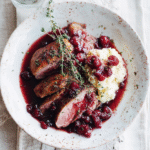
Prepare a Savory Duck with Cherry-Port Sauce
Ingredients
- 2 duck breasts 6-8 oz each
- 1 cup fresh or frozen cherries pitted
- 1/2 cup ruby port wine
- 2 tablespoons balsamic vinegar
- 1 tablespoon Dijon mustard
- 1 small shallot finely chopped
- Salt and freshly ground black pepper to taste
- 2 tablespoons unsalted butter
- Fresh thyme sprigs for garnish
Instructions
- Score the skin of the duck breasts in a crosshatch pattern.
- Season the duck breasts with salt and pepper on both sides.
- Place the duck breasts skin-side down in a cold skillet over medium heat.
- Cook for about 6-8 minutes until the skin is golden brown and crispy, then flip.
- Continue cooking for another 4-6 minutes until the internal temperature reaches 135°F for medium-rare.
- Remove the duck from the skillet and let it rest for about 5 minutes.
- In the same skillet, add shallots and cook until soft, about 2 minutes.
- Add the cherries, port, balsamic vinegar, and Dijon mustard; simmer for 5-7 minutes.
- Finish the sauce by whisking in butter until melted and smooth; season to taste.
- Slice the duck and serve drizzled with cherry-port sauce; garnish with thyme.
Notes
Additional serving suggestions: pair with a crisp salad, garlic bread, or roasted seasonal vegetables for balance.
For make-ahead, prep components separately and assemble just before heating to preserve texture.
Taste and adjust with acid (lemon/vinegar) and salt right at the end to wake up flavors.