Introduction
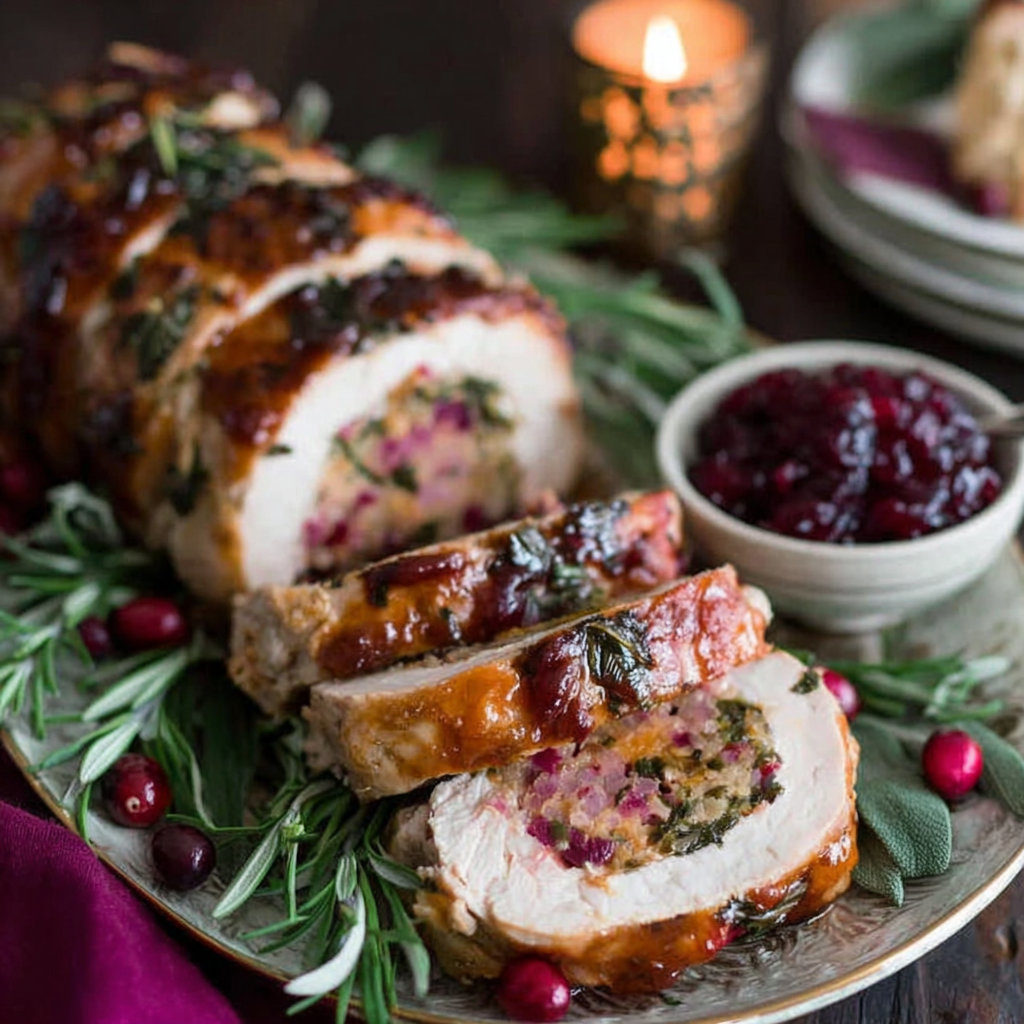
Elevate your holiday table with a turkey roulade featuring a delectable cranberry-sage stuffing. This impressive dish not only offers a stunning presentation but ensures all parts receive equal attention during cooking, ensuring juicy meat and bursting flavors.
Creating a turkey roulade does require some technique, but the rewards are well worth it. The combination of savory sage and tart cranberries in the stuffing brings a delightful holiday twist to the traditional turkey roast, making it a favorite for any festive gathering.
Ingredients
- 2 pounds boneless turkey breast
A boneless turkey breast is perfect for rolling and stuffing, providing a tender and juicy base for your roulade. This cut cooks evenly and allows the flavors of the stuffing to meld beautifully with the meat. - 1 cup stale bread cubes
Stale bread serves as the backbone of the stuffing, absorbing moisture and flavor while maintaining a desirable texture. It provides a base that holds together all the delicious ingredients, ensuring each bite is satisfying. - 1/2 cup fresh cranberries, chopped
Fresh cranberries add a tartness that beautifully contrasts the savory elements of the stuffing. Their vibrant color also enhances the visual appeal of the dish, making it festive and inviting. - 1/4 cup onion, finely diced
Onions contribute sweetness and depth of flavor to the stuffing. When sautéed, they become luminous and aromatic, pivotal for elevating the overall taste of the dish. - 1/4 cup celery, finely diced
Celery offers a crunchy texture and a hint of freshness, enhancing the stuffing's complexity. It also adds moisture and balances the flavors from richer ingredients in the mixture. - 2 tablespoons fresh sage, chopped
Sage provides a warm, earthy flavor that pairs exceptionally well with turkey. Its aromatic quality elevates the overall taste profile, making it a quintessential herb for Thanksgiving-inspired dishes. - 1/4 cup chicken broth
Chicken broth is crucial for hydrating the stuffing, ensuring it is moist without becoming soggy. It infuses additional flavor into the mixture, tying the ingredients together. - 1 tablespoon Dijon mustard
Dijon mustard adds a tangy depth that complements the turkey and stuffing beautifully. The subtle heat elevates the flavor profile and enhances the roux-like qualities of the stuffing. - Salt and pepper to taste
Seasoning with salt and pepper is essential to bring out all the flavors in your dish. Adjusting these to your taste ensures a well-balanced and flavorful roulade. - Olive oil for cooking
Olive oil is used in the preparation process to sauté the vegetables, ensuring they reach optimal tenderness and flavor. It also helps in browning the turkey roulade during cooking, resulting in a beautifully golden exterior.
Directions & Preparation
Step 1: Preheat your oven to 350°F (175°C).
Preheating the oven ensures that your turkey roulade gets an even cooking environment from the moment it goes in. This step is crucial for achieving a proper texture and ensures food safety by cooking the turkey through thoroughly.
Step 2: Prepare stuffing by sautéing onions and celery in olive oil until soft.
Sautéing the onions and celery in olive oil is essential for building the foundation of flavor in your stuffing. This process caramelizes the vegetables, releasing their natural sugars and ensuring they add both sweetness and moisture to the dish.
Step 3: Combine sautéed vegetables with bread cubes, cranberries, sage, mustard, broth, salt, and pepper.
Mixing the sautéed vegetables with the bread cubes and other ingredients allows the flavors to intermingle and meld together. Each element plays its part in building a cohesive stuffing mixture that enhances the overall taste of the roulade.
Step 4: Lay turkey breast skin side down on a clean surface and pound it to an even thickness.
Pounding the turkey breast to an even thickness ensures that it cooks uniformly and rolls more easily. This technique also helps to tenderize the meat, leading to a juicier final product.
Step 5: Spread the stuffing mixture evenly over the turkey breast, leaving edges clear.
Applying the stuffing evenly ensures that every slice of the roulade contains a balanced proportion of stuffing to meat. This distribution is key to a uniform flavor profile and visual appeal.
Step 6: Roll the turkey breast tightly from one end, tucking in the sides as you go.
Rolling the turkey tightly is important for maintaining shape and ensuring the stuffing remains inside during cooking. This technique will yield beautiful, spiral slices once the roulade is finished and carved.
Step 7: Secure the rolled turkey with kitchen twine, tying it at intervals.
Tying the roulade with kitchen twine keeps everything compact during the cooking process, prevents the stuffing from spilling out, and ensures that the turkey maintains its round shape for a professional presentation.
Step 8: Place the roulade seam-side down in a roasting pan and brush with olive oil.
Positioning the roulade seam-side down helps it hold together better while cooking. Brushing with olive oil enhances browning and wards off dryness, resulting in a succulent and flavorful exterior.
Step 9: Roast the turkey roulade for about 1 hour or until the internal temperature reaches 165°F (74°C).
Roasting to the correct internal temperature guarantees food safety, preventing any risk of undercooked poultry. Ensuring the internal temperature reaches 165°F confirms that the turkey is safe to eat while still being tender and juicy.
Step 10: Let the roulade rest for 10-15 minutes before slicing.
Resting the turkey allows the juices to redistribute throughout the meat, resulting in a moist and flavorful roulade. This step is essential, as slicing too soon can lead to a dry final product.
Step 11: Slice and serve the turkey roulade with your choice of sides.
Slicing after resting allows for clean, beautiful cuts, showcasing the stuffing inside. Presentation matters, especially during the holidays, and serving with a selection of sides creates an inviting and delicious meal.

Crafting the Perfect Stuffing
The balance of flavors in your stuffing is crucial for a successful turkey roulade. Combining fresh ingredients like cranberries, celery, and sage creates a harmony of taste that elevates the dish. To enhance the flavor, consider toasting your stale bread cubes lightly before mixing them into the stuffing. This step adds an extra layer of depth and a slight crunch, enhancing the overall mouthfeel.
Ensuring a Juicy Roulade
One of the keys to a successful turkey roulade lies in the internal temperature. Using a meat thermometer is the best way to monitor doneness without cutting into the meat. The turkey should reach 165°F in the thickest part; this ensures you enjoy a moist, flavorful roulade while maintaining food safety.
Variations and Customization
Feel free to customize the stuffing to suit your taste and dietary preferences. Options like adding pistachios for crunch, substituting dried apricots for cranberries, or even experimenting with different herbs can create a new flavor profile. Each alteration allows you to make the dish your own, creating a unique experience for every holiday meal.
FAQs
What should I do if my roulade is too dry?
If the roulade turns out dry, ensure to baste it with broth or a bit of melted butter when it's cooking. Additionally, serving it with a flavorful gravy or sauce can help moisten the meat.
Can I add nuts to the stuffing for extra texture?
Absolutely! Adding chopped nuts like walnuts or pecans can enhance the texture of the stuffing and provide a nutty flavor that complements the other ingredients.
What other sides pair well with turkey roulade?
Sides like roasted Brussels sprouts, cranberry sauce, and a light salad can complement the richness of the turkey roulade beautifully, providing balance to the meal.
Can I make my stuffing in advance?
Yes, preparing the stuffing ahead of time is possible. Simply store it in the refrigerator and assemble the roulade on the day you plan to cook.
Why did my stuffing turn out too thick?
If your stuffing is too thick, try gently stirring in a little more broth to loosen it up before spreading it on the turkey. This will create a more manageable consistency for rolling.
How can I enhance the flavor of my turkey roulade?
To boost flavor, consider marinating the turkey for a few hours or overnight with herbs and spices. This allows the flavors to penetrate the meat more deeply.
Conclusion
This turkey roulade with cranberry-sage stuffing is not just a dish; it's a centerpiece that highlights the joy of cooking and sharing meals with loved ones. Its beautiful presentation and layered flavors will surely make an impression during any festive celebration.
Embrace the challenge of rolling and stuffing turkey, and you’ll discover a new favorite for your holiday traditions. With each slice, share the warmth and joy of the season, creating lasting memories around your dining table.
Recipe Card
Festive Turkey Roulade with Cranberry-Sage Stuffing
Ingredients
- 2 pounds boneless turkey breast
- 1 cup stale bread cubes
- 1/2 cup fresh cranberries chopped
- 1/4 cup onion finely diced
- 1/4 cup celery finely diced
- 2 tablespoons fresh sage chopped
- 1/4 cup chicken broth
- 1 tablespoon Dijon mustard
- Salt and pepper to taste
- Olive oil for cooking
Instructions
- Preheat your oven to 350°F (175°C).
- Prepare stuffing by sautéing onions and celery in olive oil until soft.
- Combine sautéed vegetables with bread cubes, cranberries, sage, mustard, broth, salt, and pepper.
- Lay turkey breast skin side down on a clean surface and pound it to an even thickness.
- Spread the stuffing mixture evenly over the turkey breast, leaving edges clear.
- Roll the turkey breast tightly from one end, tucking in the sides as you go.
- Secure the rolled turkey with kitchen twine, tying it at intervals.
- Place the roulade seam-side down in a roasting pan and brush with olive oil.
- Roast the turkey roulade for about 1 hour or until the internal temperature reaches 165°F (74°C).
- Let the roulade rest for 10-15 minutes before slicing.
- Slice and serve the turkey roulade with your choice of sides.
Notes
Additional serving suggestions: pair with a crisp salad, garlic bread, or roasted seasonal vegetables for balance.
For make-ahead, prep components separately and assemble just before heating to preserve texture.
Taste and adjust with acid (lemon/vinegar) and salt right at the end to wake up flavors.