Introduction
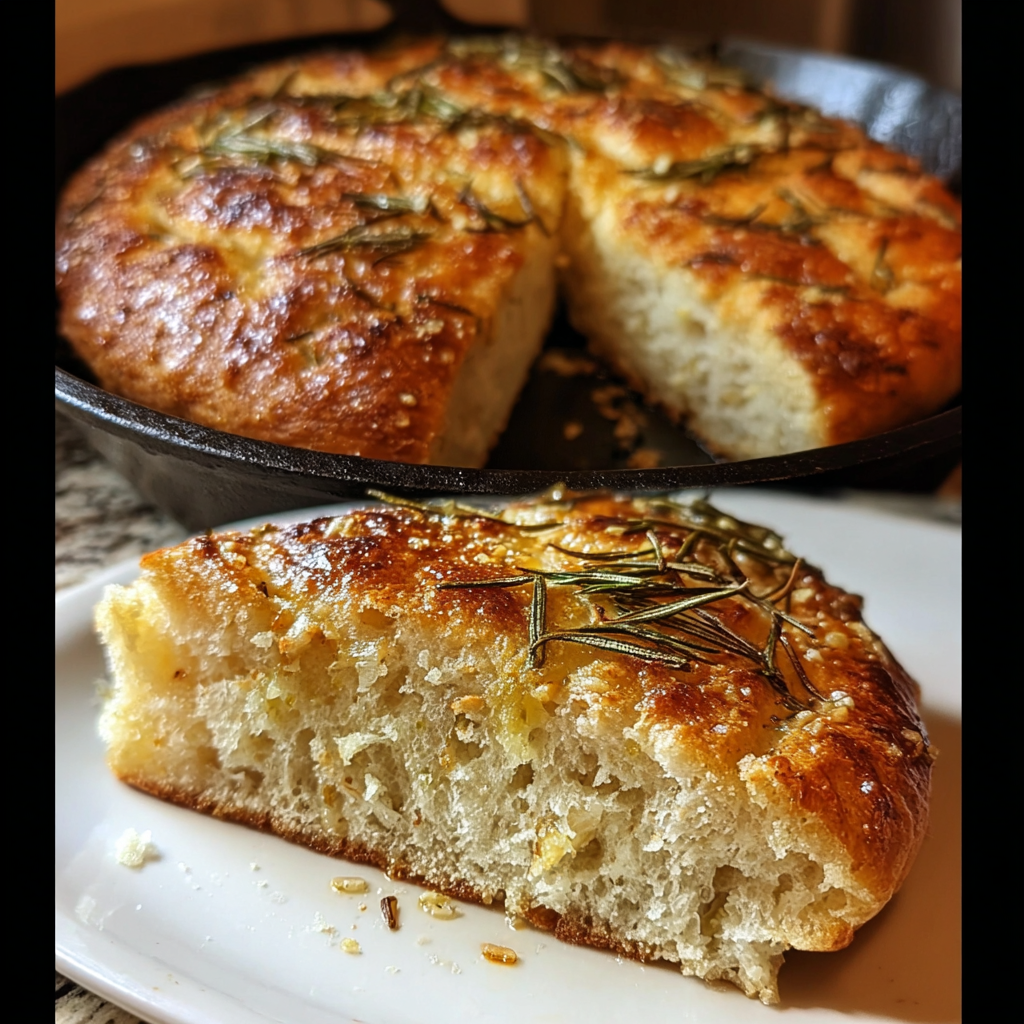
There’s something magical about the combination of garlic and rosemary that elevates even the simplest dish. When these two flavors combine in a rustic skillet bread, you create not just a side dish, but a centerpiece for your dinner table. This Delicious Rustic Garlic Rosemary Skillet Bread is a perfect blend of savory herbs and baked goodness that invites conversation and complements your main courses.
Imagine tearing off a piece of freshly baked bread, warm and fragrant, and dipping it in olive oil or pairing it with your favorite cheese. This bread is not just a treat for the palate; it’s an experience that enhances any meal. Whether it’s a casual family dinner or a festive gathering, this bread promises to impress your guests and satisfy your cravings.
Ingredients
- 3 cups all-purpose flour
The base of your bread, all-purpose flour provides structure and chewiness that balances the softness of the bread. Its gluten content helps the bread rise and gives it that delightful texture. - 2 teaspoons instant yeast
Instant yeast works swiftly to ferment the dough, leading to a light and airy bread. It doesn’t require proofing, which makes the process simpler and quicker. - 1 tablespoon sugar
Sugar feeds the yeast, helping it to activate faster. It also adds a subtle sweetness that rounds out the flavors without overpowering the savory elements of garlic and rosemary. - 1 teaspoon salt
Salt is essential in bread making not just for flavor, but it also strengthens the gluten structure, enhancing the texture. It balances the sweetness and richness of the other components. - 1/4 cup olive oil
Olive oil enriches the dough, contributing to its tenderness and flavor. It also adds a hint of Mediterranean essence that perfectly complements garlic and rosemary. - 1 1/2 cups warm water
Warm water activates the yeast and hydrates the flour, leading to a dough that is easy to work with. The warmth encourages the yeast to rise quickly, resulting in a well-aerated bread. - 4 cloves garlic, minced
Garlic infuses the bread with a robust aroma and flavor, creating a delightful savory contrast to the sweet notes of the bread. Use fresh garlic for the best results. - 2 tablespoons fresh rosemary, chopped
Rosemary adds a fragrant, earthy flavor that pairs beautifully with garlic. Its aromatic properties enhance the overall taste of the bread, making it aromatic and inviting.
Directions & Preparation
Step 1: Combine dry ingredients
In a large mixing bowl, whisk together the flour, yeast, sugar, and salt. This step is crucial as it ensures that the ingredients are evenly distributed, thus allowing the yeast to activate fully and the bread to rise uniformly.
Step 2: Mix in wet ingredients
Create a well in the dry mixture and pour in the warm water and olive oil. Stir with a wooden spoon until a shaggy dough forms. This step integrates the ingredients, and the dough should start looking cohesive without being too wet or too dry.
Step 3: Incorporate garlic and rosemary
Add the minced garlic and chopped rosemary to the dough, mixing well. This addition brings flavor directly into the bread’s body, ensuring every bite is infused with those delightful herbs.
Step 4: Knead the dough
Transfer the dough onto a lightly floured surface and knead it for about 5-7 minutes until it’s smooth and elastic. This is vital for developing the gluten network, which gives the bread its texture. A well-kneaded dough will spring back when pressed.
Step 5: First rise
Place the kneaded dough in a greased bowl, cover it with a clean towel, and let it rise in a warm area for about 1 hour or until doubled in size. Rising allows the yeast to ferment the sugars, producing carbon dioxide that creates the airy structure.
Step 6: Shape the dough
Once risen, punch down the dough to release air, then shape it into a rough round. This shaping introduces a uniform structure that will create a nice dome when baked. Don’t be rough—handle it gently.
Step 7: Preheat the skillet
Heat a cast-iron skillet over medium heat while you’re shaping your dough. Preheating the skillet ensures the bread starts cooking immediately, leading to a crispy crust. A hot skillet is key to a successful bake.
Step 8: Bake the bread
Carefully place your shaped dough in the hot skillet and cover it. Bake for 20-25 minutes, or until the top is golden and sounds hollow when tapped. This step is crucial as it gives the bread its crust while the steam from the covered skillet helps it cook evenly.
Step 9: Cool and serve
Remove the skillet from heat and let the bread cool for a few minutes before transferring it to a wire rack. Cooling prevents sogginess and ensures the texture is perfect. Serve warm with olive oil or your favorite dip.

The Importance of Kneading
Kneading is a fundamental step in bread making that strengthens the gluten structure of the dough. This process helps trap the gases released by the yeast, which leads to a well-risen loaf. A properly kneaded dough can be recognized by its smooth, elastic texture that springs back when poked gently.
Choosing the Right Rosemary
Fresh rosemary is crucial for bringing vibrant flavor to your skillet bread. Look for bright green, firm leaves without browning or wilting. Avoid dried rosemary if possible, as it tends to be more pungent and can make the aroma unbalanced. Use a sharp knife for easy chopping, releasing the herb's essential oils.
Serving Suggestions for Skillet Bread
This garlic rosemary skillet bread is versatile and can elevate various meals. Consider serving it alongside hearty soups, roasted meats, or a fresh salad. It’s also delightful paired with a dipping oil made of balsamic vinegar and extra virgin olive oil, or simply slathered with butter for an indulgent treat.
FAQs
What can I do if my skillet bread is too dense?
If your bread is overly dense, it may not have risen properly due to insufficient kneading or fermentation. Ensure that your dough is airy and feels light before baking.
What if my dough is too sticky to handle?
If your dough is too sticky, you can sprinkle a bit more flour on your work surface and on your hands while shaping it. Just be cautious not to add too much, as it may affect texture.
Can I substitute other herbs in this bread?
Absolutely! While garlic and rosemary are a classic combo, you can experiment with other herbs like thyme, oregano, or even sage for varied flavors.
What happens if I don’t have a cast-iron skillet?
If you lack a cast-iron skillet, a heavy-bottomed frying pan or any oven-safe skillet can work. Just ensure it can handle the heat and retains it well.
Why does my bread smell too strong of garlic?
An overpowering garlic smell could result from using too much garlic or roasting it improperly. For a milder flavor, reduce the garlic or sauté it lightly before adding.
How can I enhance the crust of my bread?
For a crustier exterior, place a pan with water in the oven next to your skillet to create steam while baking. This moisture helps develop a crispy crust.
Conclusion
Delicious Rustic Garlic Rosemary Skillet Bread captures the essence of home-cooked flavors that can bring everyone together. With its simple ingredients and straightforward methods, you can craft a bread that not only nourishes but also delights the senses.
Every bite of this warm, aromatic bread is a celebration of the healing powers of homemade fare. Share it with loved ones and make every meal special with this inviting bread that speaks of warmth and comfort.
Recipe Card
Hearty Garlic Rosemary Skillet Bread Recipe
Ingredients
- 3 cups all-purpose flour
- 2 teaspoons instant yeast
- 1 tablespoon sugar
- 1 teaspoon salt
- 1/4 cup olive oil
- 1 1/2 cups warm water
- 4 cloves garlic minced
- 2 tablespoons fresh rosemary chopped
Instructions
- Combine dry ingredients
- Mix in wet ingredients
- Incorporate garlic and rosemary
- Knead the dough
- First rise
- Shape the dough
- Preheat the skillet
- Bake the bread
- Cool and serve
Notes
Additional serving suggestions: pair with a crisp salad, garlic bread, or roasted seasonal vegetables for balance.
For make-ahead, prep components separately and assemble just before heating to preserve texture.
Taste and adjust with acid (lemon/vinegar) and salt right at the end to wake up flavors.