Introduction
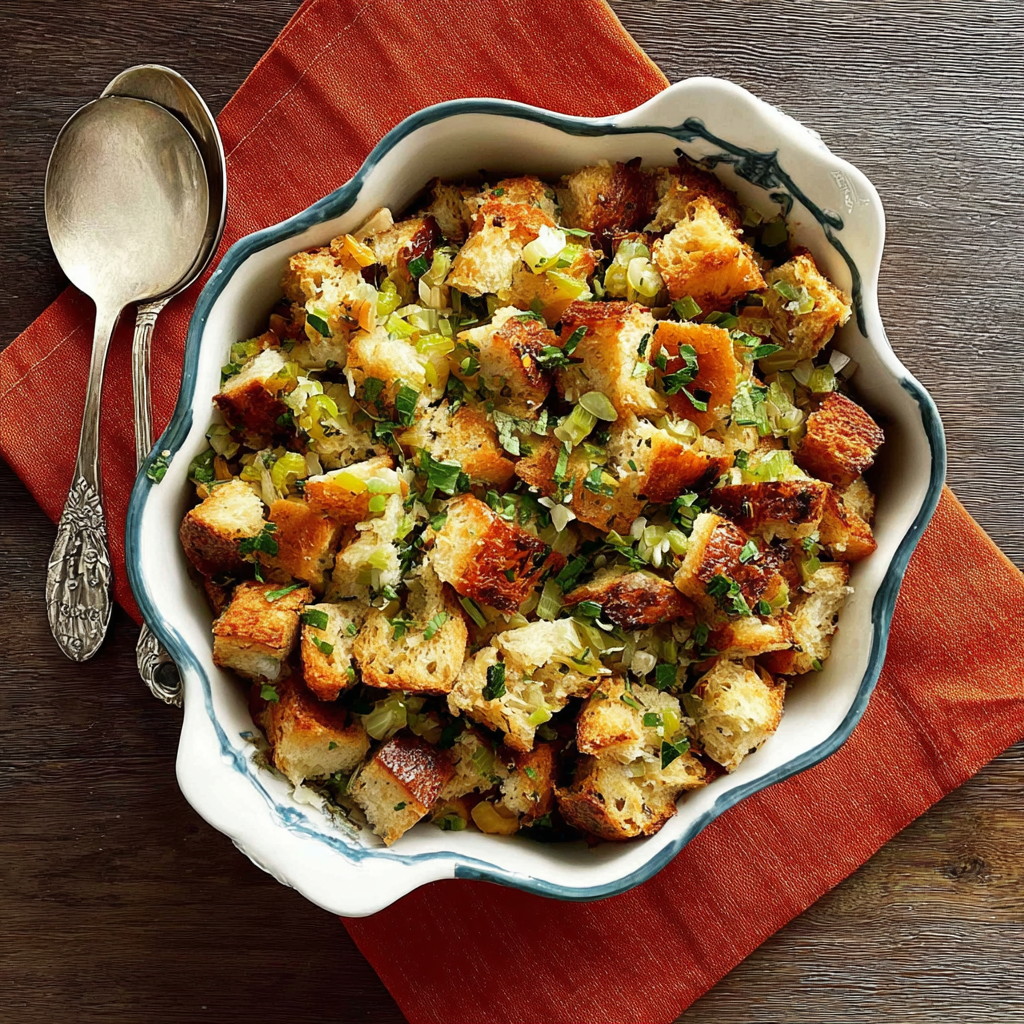
Old-fashioned bread stuffing is a quintessential dish that evokes memories of family gatherings and festive feasts. Its rich flavors meld beautifully with roasted meats, especially turkey, making it a beloved addition to any holiday table.
This rustic stuffing is characterized by its hearty breadcrumbs, aromatic herbs, and the satisfying depth achieved through a perfect balance of stocks and spices. Each bite provides a warm, comforting experience that pays homage to culinary traditions passed down through generations.
Whether you choose to prepare it in a casserole dish or stuff it into your favorite bird, this timeless recipe guarantees both nostalgia and flavor, allowing you to connect with family heritage through a beloved dish.
Ingredients
- 1 loaf of day-old bread, cubed
Using day-old bread is essential as it absorbs the broth without becoming mushy. A mix of white and whole grain adds depth, while cubing ensures even toasting. - 1 cup unsalted butter, melted
Butter enriches the stuffing, providing both moisture and flavor. It's the foundation for sautéing vegetables and enhances the overall taste of the dish. - 1 onion, diced
Onions contribute a subtle sweetness and savory flavor when sautéed. They serve as aromatics that enhance the stuffing's base. - 2 celery stalks, diced
Celery adds a crunchy texture and a fresh, herbal note, balancing the richness of the butter and bread. Its flavor plays a vital role in creating a well-rounded stuffing. - 2 teaspoons dried thyme
Thyme offers an earthy depth and pairs beautifully with the savory elements of the stuffing. It enhances the dish's fragrance and complexity. - 1 teaspoon dried sage
Sage adds a warm, slightly peppery flavor that's traditionally associated with holiday stuffing. It's a key herb that enriches the stuffing's overall profile. - 4 cups chicken or vegetable broth
Broth is crucial for moistening the bread. It infuses flavor throughout the dish, making every bite more savory and satisfying. - 1/2 teaspoon salt
Salt elevates all the flavors and ensures each component shines through. Adjusting salt levels is vital for achieving the right balance. - 1/2 teaspoon black pepper
Black pepper delivers a mild heat that complements the richness of the other ingredients, adding a further dimension to the stuffing. - 1/2 cup chopped fresh parsley
Parsley brightens the dish with its fresh herbal flavor. It is used both for color and to enhance the overall taste of the stuffing.
Directions & Preparation
Step 1: Prepare the bread cubes by drying them out.
Start by preheating your oven to 300°F (150°C). Spread the cubed bread evenly on a baking sheet and toast it in the oven for about 15-20 minutes, turning once halfway through. This step is crucial as dried bread will absorb the broth more effectively, allowing for a well-textured stuffing that isn't soggy.
Step 2: Sauté the vegetables.
In a large skillet, melt the butter over medium heat and add the diced onion and celery. Sauté for about 5-7 minutes, until the vegetables are softened and fragrant. This step builds a flavorful base, as the onions caramelize slightly and the celery releases its moisture, creating a savory mixture that enhances the overall stuffing.
Step 3: Combine the bread, sautéed vegetables, and seasonings.
In a large mixing bowl, combine the toasted bread, sautéed vegetables, thyme, sage, salt, pepper, and parsley. Use your hands to gently mix, ensuring the herbs and seasonings are evenly distributed. This step is important to ensure every bite of stuffing has a balanced flavor profile, with the herbs marrying beautifully with the vegetables and bread.
Step 4: Moisten the mixture with broth.
Gradually pour in the broth, starting with about 2 cups and adding more as needed until the bread is moist but not soggy. Use your hands to mix gently, incorporating the broth thoroughly while ensuring the bread maintains its texture. This step is crucial; too little broth results in dry stuffing, while too much can lead to a mushy consistency.
Step 5: Transfer to a baking dish.
Preheat your oven to 350°F (175°C). Lightly grease a 9×13-inch baking dish and pour the stuffing mixture into it, spreading it evenly. This allows the stuffing to cook evenly while creating a crispy top, which is a delightful contrast to the moist interior of the stuffing.
Step 6: Bake the stuffing.
Cover the baking dish with foil and bake for 30 minutes. Then, remove the foil and bake for an additional 15-20 minutes until the top is golden brown. This step is important for achieving the desired texture—soft on the bottom and crispy on top. The covering allows for steam to circulate while the final baking time adds that necessary crispy finish.

The Role of Herbs in Flavor Development
Herbs play a pivotal role in the flavor profile of old-fashioned bread stuffing. Thyme and sage are traditional choices, providing earthy notes and complementing the richness of the bread and butter. Fresh parsley adds brightness and a pop of color, elevating the dish both visually and tastefully. Experimenting with other herbs, like rosemary or even savory, can personalize the stuffing and enhance its aroma.
Choosing the Right Bread for Depth and Texture
Selecting the right bread for your stuffing is crucial. A combination of white bread and whole grain not only enhances flavor but also contributes to texture. Whole grain adds a nutty aroma and firmer structure, while white bread provides a soft base that soaks up the flavors beautifully. Avoid overly processed bread that lacks flavor; artisan or homemade bread works best for a rustic experience.
Serving Suggestions to Elevate Your Feast
Old-fashioned bread stuffing pairs wonderfully with various dishes, particularly roast turkey. To elevate your feast, consider serving it alongside cranberry sauce, which adds a sweet and tart contrast. Toss in a side of roasted seasonal vegetables for color and nutrition, and don’t forget a rich gravy drizzled over the stuffing. These accompaniments will elevate not only the flavors but also the overall presentation of your meal.
FAQs
What should I do if my stuffing is too dry?
If your stuffing turns out dry, add extra broth gradually until the desired moisture is reached. Mix gently to incorporate without making it mushy.
How do I ensure my stuffing has enough flavor?
Taste the mixture before baking and adjust seasonings as needed. Adding more herbs or a squeeze of lemon juice can brighten up the flavors.
Can I use a different type of broth for added depth?
Absolutely! Consider using homemade turkey broth or vegetable stock for a richer flavor profile that complements the stuffing perfectly.
What can I do if my stuffing balls are falling apart?
If your stuffing balls are crumbling, ensure there is enough moisture from the broth. You may also need to incorporate a beaten egg to help bind the mixture.
How do I scale this recipe for a larger gathering?
To scale the recipe, simply multiply the quantity of each ingredient by the number of guests, adding a little extra broth to accommodate for larger bread quantities.
What can I add to my stuffing for extra texture?
Nuts like chopped pecans or walnuts add crunch and depth. You may also consider including sautéed mushrooms or dried fruits for a unique twist.
Conclusion
Old-fashioned bread stuffing is not just a side dish; it’s a celebration of flavors and traditions that can bring family and friends together. Each ingredient contributes to the memory-making experience, making your gatherings feel special and heartwarming.
By embracing this recipe, you are not only nourishing those you love but also honoring a culinary legacy that has stood the test of time. So gather your loved ones, set the table, and relish the joy that comes with sharing a meal filled with love and tradition.
Recipe Card
Embrace Tradition with Old-Fashioned Bread Stuffing
Ingredients
- 1 loaf of day-old bread cubed
- 1 cup unsalted butter melted
- 1 onion diced
- 2 celery stalks diced
- 2 teaspoons dried thyme
- 1 teaspoon dried sage
- 4 cups chicken or vegetable broth
- 1/2 teaspoon salt
- 1/2 teaspoon black pepper
- 1/2 cup chopped fresh parsley
Instructions
- Prepare the bread cubes by drying them out.
- Sauté the vegetables.
- Combine the bread, sautéed vegetables, and seasonings.
- Moisten the mixture with broth.
- Transfer to a baking dish.
- Bake the stuffing.
Notes
Additional serving suggestions: pair with a crisp salad, garlic bread, or roasted seasonal vegetables for balance.
For make-ahead, prep components separately and assemble just before heating to preserve texture.
Taste and adjust with acid (lemon/vinegar) and salt right at the end to wake up flavors.