Introduction
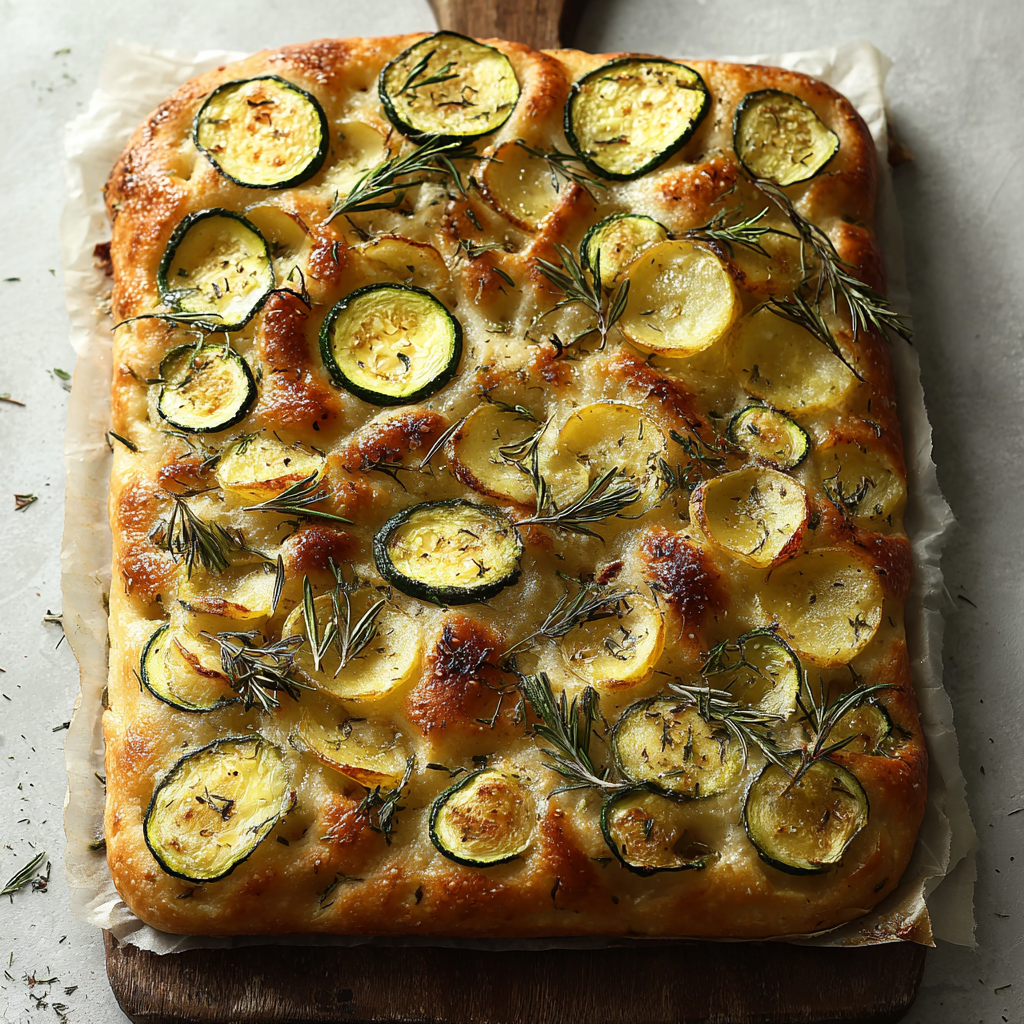
Focaccia, a beloved staple of Italian cuisine, becomes a canvas for vibrant vegetables in this delightful recipe featuring zucchini and potatoes. The airy bread, with its crispy crust and soft interior, beautifully complements the tender, savory toppings. This combination not only elevates the classic focaccia but also adds nutritional value, making it a hearty option for any meal.
The interplay of zucchini's fresh, mild flavor with the earthy notes of potatoes creates a balance that's both comforting and invigorating. Whether enjoyed as an accompaniment to soups and salads or as a snack on its own, this focaccia promises to impress at any dining table. Easy to prepare and incredibly versatile, it's the perfect dish for home cooks looking to elevate their baking repertoire.
Ingredients
- 500g all-purpose flour
All-purpose flour serves as the primary structure for the focaccia, providing the necessary gluten development for a chewy yet tender texture. The type of flour will largely affect the final result, so opting for high-quality flour is recommended for the best flavor. - 2 teaspoons instant yeast
Yeast is crucial for fermentation, enabling the dough to rise and develop its airy texture. Using instant yeast allows for a quicker rise, which is ideal for busy cooks, as it can be mixed directly into the dry ingredients without needing to be activated beforehand. - 350ml warm water
Warm water activates the yeast and hydrates the flour, leading to proper gluten development. The temperature is essential; too hot can kill the yeast, while too cold may slow the fermentation process. Aim for lukewarm water, about 100°F (38°C). - 2 teaspoons salt
Salt enhances the flavor of the focaccia while balancing the dough’s sweetness. Additionally, it helps regulate yeast activity, preventing it from rising too quickly, which can lead to a dense bread. - 50ml olive oil, plus extra for drizzling
Olive oil enriches the dough, giving it a lovely flavor and tender crumb. It also plays a crucial role in preventing the focaccia from sticking to the pan and contributes to the crispy crust when drizzled on top before baking. - 1 medium zucchini, thinly sliced
Zucchini adds moisture and a delicate flavor to the focaccia. Its texture becomes tender when cooked, creating a lovely contrast to the crispiness of the bread. - 1 medium potato, thinly sliced
Potatoes not only contribute to the overall heartiness of the dish but also introduce a unique creaminess. Their starches help bind the toppings, enhancing the focaccia's flavors as everything bakes together. - Fresh herbs (rosemary or thyme), for garnish
Fresh herbs elevate the focaccia with aromatic notes that enhance the earthy flavors of the zucchini and potatoes. Rosemary, with its robust flavor, can withstand the heat of baking, while thyme adds a subtle hint of sweetness. - Sea salt, for finishing
Sprinkling sea salt on top of the focaccia right before baking not only adds a crunch but also enhances the bread's flavor. It contrasts beautifully with the soft toppings and gives each bite an extra burst of savory goodness.
Directions & Preparation
Step 1: Prepare the dough.
In a large bowl, combine the flour, instant yeast, and salt. Add warm water and olive oil, mixing until the dough comes together. This initial combination helps to activate the yeast, which is vital for achieving a good rise. Knead the dough for about 10 minutes until smooth and elastic. Proper kneading develops gluten, essential for the dough's structure.
Step 2: Let the dough rise.
Cover the dough with a damp cloth and let it rise in a warm place for about 1-1.5 hours, or until it has doubled in size. This step allows the yeast to ferment and produce gas bubbles, resulting in a light and airy focaccia. Make sure the environment is warm; if not, consider placing it near a slightly warmed oven or a sunny spot.
Step 3: Prepare the baking pan.
Grease a baking sheet or pan with olive oil, ensuring an even coating. This prevents sticking and also contributes to a crispy crust. A rimmed baking sheet is ideal for focusing the dough's rise and helps create those signature airy pockets within.
Step 4: Shape the dough.
After the dough has risen, gently punch it down to release excess gas. Transfer it to the prepared baking pan and press it out to fit the shape of the pan. This gentle handling keeps bubbles intact while ensuring the dough fills the corners. Allow it to rest for another 20-30 minutes for a final rise before topping.
Step 5: Preheat the oven.
Preheat your oven to 220°C (428°F), which is essential for achieving a beautifully browned focaccia. A hot oven helps create steam within the dough, promoting a light structure while developing that desirable crispy crust.
Step 6: Add toppings.
Arrange the thinly sliced zucchini and potato evenly over the risen dough. Drizzle with olive oil and sprinkle with fresh herbs and sea salt. The toppings not only provide flavor but also moisture, ensuring the bread doesn’t dry out while baking. Taking time to layer toppings aesthetically adds visual appeal to your focaccia.
Step 7: Bake the focaccia.
Place the focaccia in the preheated oven and bake for 20-25 minutes, or until golden brown. This duration encourages the development of a crust, while the vegetables caramelize lightly, enhancing their flavor. Keep an eye on the focaccia towards the end to avoid over-browning.
Step 8: Cool and serve.
Once baked, remove the focaccia from the oven and let it cool slightly in the pan before transferring it to a wire rack. Cooling allows the bread to firm up slightly, making slicing easier. Enjoy it warm or at room temperature, perfect for gatherings or as a delightful snack.

Elevating Flavor with Fresh Herbs
Incorporating fresh herbs like rosemary or thyme elevates your focaccia by enhancing the natural flavors of the vegetables. As they bake, herbs infuse the bread with aromatic scents that stimulate the senses and draw guests in. Dabbing a bit of herb-infused olive oil before serving can bring an additional layer of complexity.
The Importance of Proper Kneading
Kneading the focaccia dough is a pivotal step in creating the perfect texture. It helps develop the gluten necessary for a chewy structure while allowing the dough to retain air pockets during fermentation. The longer you knead, the lighter the end product, so don’t rush this essential phase if you desire fluffy focaccia.
Experimenting with Toppings
Feel free to get creative with your focaccia toppings! While zucchini and potatoes shine in this recipe, other seasonal vegetables, fresh cheeses, or even olives can make a delightful addition. The versatility of focaccia means you can adapt it to whatever you have on hand, ensuring that every batch can be uniquely yours.
FAQs
What if my focaccia turns out too thick?
If your focaccia is too thick, it may be due to not pressing the dough out flat enough when shaping. For a thinner focaccia, make sure to stretch the dough to fully cover the baking pan, allowing it to rise evenly.
Can I use other vegetables besides zucchini and potatoes?
Absolutely! Feel free to experiment with vegetables like bell peppers, cherry tomatoes, or even mushrooms. Just ensure they are cut thinly to avoid excess moisture during baking.
My focaccia came out bland. What can I do?
To enhance flavor, consider increasing the amount of salt in the dough or adding more herbs to the toppings. Drizzling with a flavored olive oil before serving can also provide a burst of taste.
How can I tell if my focaccia is fully baked?
The focaccia is done when it is golden brown on top and sounds hollow when tapped on the bottom. An internal temperature of about 90°C (194°F) is also a good indicator of doneness.
What is the best way to slice focaccia?
It’s best to slice focaccia when it has cooled slightly. Use a serrated knife for clean cuts, ensuring the toppings stay intact and providing a nicer presentation.
Is it possible to make this focaccia without using yeast?
If you want to avoid using yeast, consider making a soda bread variant. However, for the classic focaccia experience, yeast is essential for achieving that signature texture.
Can I add cheese directly to the focaccia?
Yes, adding cheese like feta or mozzarella on top of the vegetables can enrich the flavors. Just be mindful of the moisture it may add and adjust baking times if necessary.
What if the dough is too sticky to handle?
If you find the dough too sticky, try adding small amounts of flour until it reaches a manageable consistency. Wet hands also help in handling sticky dough without adding excess flour.
Conclusion
Focaccia with zucchini and potatoes is a delightful dish that pairs rustic charm with a touch of elegance. As you explore flavor combinations and toppings, you have endless opportunities to make each bake unique and personal. It’s not just about nourishing the body, but also about creating a communal experience around the table.
Whether served warm with a drizzle of olive oil or as a sandwich base, this focaccia is bound to become a favorite in your culinary repertoire. Embrace the joy of baking with this recipe and savor every bite of your delicious creation.
Recipe Card
Irresistible Focaccia with Zucchini and Potatoes
Ingredients
- 500 g all-purpose flour
- 2 teaspoons instant yeast
- 350 ml warm water
- 2 teaspoons salt
- 50 ml olive oil plus extra for drizzling
- 1 medium zucchini thinly sliced
- 1 medium potato thinly sliced
- Fresh herbs rosemary or thyme, for garnish
- Sea salt for finishing
Instructions
- Prepare the dough.
- Let the dough rise.
- Prepare the baking pan.
- Shape the dough.
- Preheat the oven.
- Add toppings.
- Bake the focaccia.
- Cool and serve.
Notes
Additional serving suggestions: pair with a crisp salad, garlic bread, or roasted seasonal vegetables for balance.
For make-ahead, prep components separately and assemble just before heating to preserve texture.
Taste and adjust with acid (lemon/vinegar) and salt right at the end to wake up flavors.